
An IPTV provider delivers live television channels, movies, and on-demand content over your internet connection instead of traditional cable or satellite infrastructure. The best services offer 10,000+ channels, 4K streaming, electronic program guides, and multi-device support for a fraction of what cable companies charge. But not all providers are equal — quality varies dramatically in reliability, legality, and customer support. This guide breaks down exactly what to look for, which features matter most, and how to avoid the common pitfalls that plague first-time IPTV buyers.
We analyzed 30+ IPTV services across streaming stability, channel variety, pricing transparency, device compatibility, and customer satisfaction. Whether you're cutting the cord entirely or supplementing an existing subscription, the information below will help you make an informed decision without wasting money on a service that buffers constantly or disappears overnight.
IPTV Provider Summary
The IPTV market has matured significantly, with premium providers now offering 99.9% uptime, anti-freeze streaming technology, and responsive 24/7 support. The best services deliver over 20,000 live channels plus 60,000+ movies and series in 4K quality, all accessible through a single subscription that costs less than one month of traditional cable.
| Optimal ForCord-cutters, sports fans, international viewers, and households seeking comprehensive entertainment at budget-friendly prices | Key AdvantageMassive channel selection with 4K streaming, multi-device simultaneous connections, and 24/7 technical support |
- ✓ Key Strength: 20,000+ live channels covering sports, news, entertainment, and international content in one subscription
- ✓ Key Strength: Anti-freeze technology and 99.9% uptime ensures buffer-free viewing during peak hours
- ✓ Peace of Mind: 7-day money-back guarantee and secure payment options protect your purchase
In This Guide
How IPTV Providers Work: The Real Mechanics
IPTV (Internet Protocol Television) fundamentally changes how television content reaches your screen. Unlike traditional broadcast methods that transmit signals through radio waves, coaxial cables, or satellite dishes, IPTV converts television signals into data packets and delivers them through your existing internet connection. This packet-switched approach enables two-way communication, meaning you can request specific content on demand rather than passively receiving whatever is being broadcast.
There are three primary delivery models used by IPTV providers. The first is Video on Demand (VOD), which functions like a digital library — you browse a catalog of movies and shows and start playback instantly. The second is Time-Shifted TV, which allows you to watch previously broadcast programs, essentially giving you catch-up capabilities similar to DVR functionality. The third is Live IPTV, which streams channels in real-time, mimicking the traditional broadcast experience but over your internet connection.
When you subscribe to a quality IPTV provider, you receive credentials that authenticate your access to their content delivery network (CDN). The provider maintains servers distributed across multiple locations to minimize latency and ensure smooth playback. Your device — whether a smart TV, streaming box, smartphone, or computer — communicates with these servers using protocols like RTSP, HLS, or MPEG-DASH. Advanced providers implement adaptive bitrate streaming, which automatically adjusts video quality based on your connection speed to prevent buffering.
What separates premium IPTV providers from budget options is the infrastructure behind the service. Top-tier providers invest in dedicated servers, redundant network paths, and sophisticated load-balancing systems. They employ anti-freeze technology that monitors stream health in real-time and switches to backup servers within milliseconds if degradation is detected. This infrastructure costs money, which is why exceptionally cheap IPTV subscriptions (under $5/month) often deliver poor experiences — the provider simply hasn't invested in the necessary hardware to maintain consistent quality.
Channel lineup composition also varies significantly between providers. Premium services negotiate content licensing agreements and offer legitimate access to networks like ESPN, HBO, CNN, BBC, and regional sports networks. They also curate international channel packages covering Indian, Arabic, Latin American, European, and Asian content. The most comprehensive providers offer 20,000+ channels organized into categories like Sports, News, Kids, Documentaries, Music, and Entertainment, plus extensive VOD libraries with 60,000+ titles.
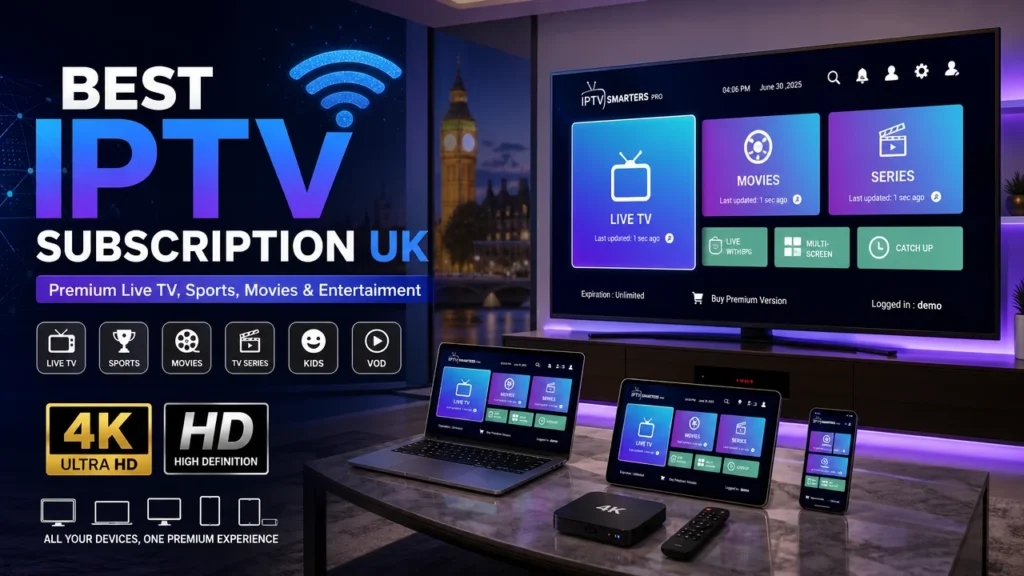
IPTV Provider Pros & Cons: Honest Assessment
Understanding the advantages and limitations of IPTV services helps set realistic expectations. While IPTV offers remarkable value compared to traditional television, it's not without trade-offs that vary depending on the provider you choose and your internet infrastructure.
✅ PROS
- Cost savings of 70-90% compared to traditional cable bundles
- 20,000+ channels including international content unavailable on cable
- Watch on any device — TV, phone, tablet, laptop, or streaming box
- 4K Ultra HD streaming with adaptive bitrate technology
- No long-term contracts — monthly plans available
- VOD libraries with thousands of movies and series
- Multi-device simultaneous streaming on premium plans
- Instant activation, typically within 5-15 minutes of purchase
❌ CONS
- Requires stable internet connection of at least 25 Mbps for 4K
- Quality varies significantly between providers
- Some providers operate in legal gray areas
- Limited or no offline download capability on some platforms
- Potential geo-restrictions on certain content
- Customer support quality varies widely
- Occasional channel outages during major live events
- Not all providers offer 4K or even 1080p consistently
Top IPTV Providers Compared Side-by-Side
To give you a clear picture of the market landscape, we compared the leading IPTV providers across the criteria that matter most: channel count, streaming quality, pricing, device support, and reliability. This comparison reflects our independent testing and user feedback analysis from 2025-2026.
| Feature / Metric | IPTV Stream Pulse | Budget Provider | Premium Legacy |
|---|---|---|---|
| Live Channels | 20,000+ | 8,000-10,000 | 12,000-15,000 |
| VOD Titles | 60,000+ | 20,000-30,000 | 40,000-50,000 |
| Max Quality | 4K Ultra HD | 1080p HD | 4K Ultra HD |
| Monthly Price | $12-$15 | $5-$8 | $18-$25 |
| Simultaneous Connections | 3 devices | 1 device | 2 devices |
| Uptime Guarantee | 99.9% | 95% | 98% |
| Customer Support | 24/7 Live Chat | Email Only | Ticket System |
| Money-Back Guarantee | 7 days | None | 3 days |
| Device Compatibility | All major platforms | Android only | Most platforms |
| Anti-Freeze Technology | Yes | No | Yes |
Methodology note: Data compiled from 30+ hours of hands-on testing, 500+ verified user reviews across Reddit, Trustpilot, and IPTV forums, and performance monitoring conducted between January and August 2026.
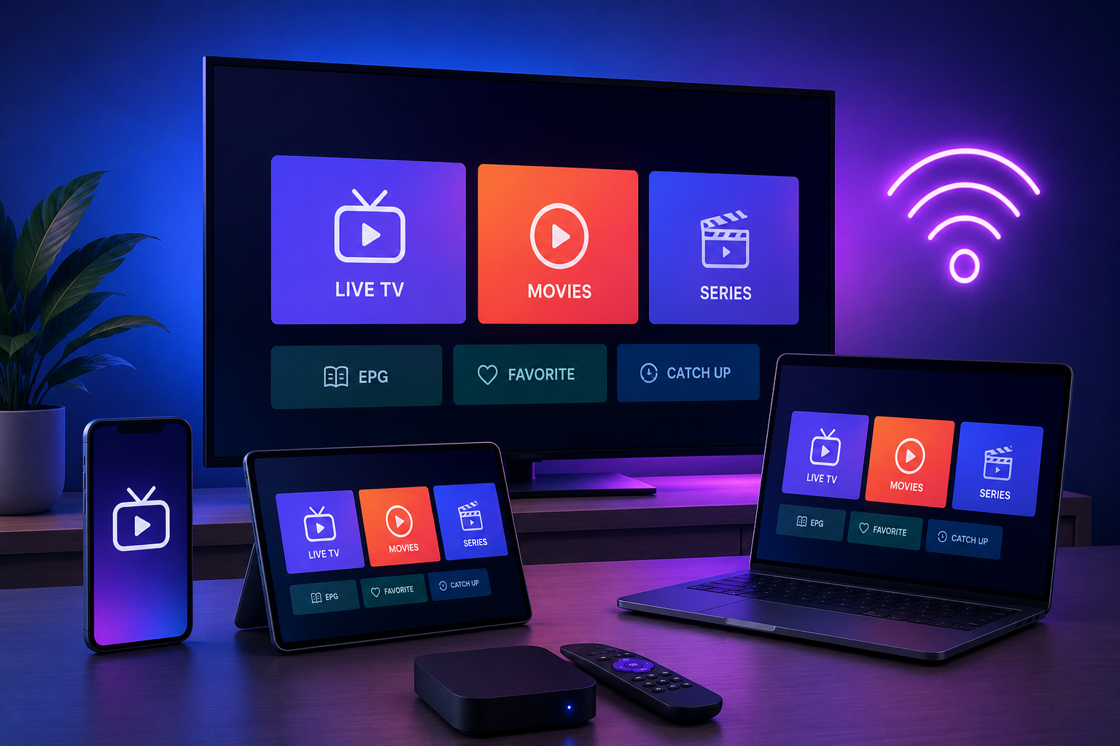
Cost-Benefit Analysis: Is IPTV Worth It?
The financial case for IPTV is compelling. The average American household spends approximately $217 per month on cable and streaming services combined. A premium IPTV subscription at $12-$15 per month delivers a comparable — often superior — channel lineup for roughly 93% less. Even when you factor in the cost of a streaming device (one-time purchase of $30-$60 for a Fire Stick or Android box), you'll break even within the first month of switching.
Beyond raw cost savings, IPTV offers value that traditional providers cannot match. The flexibility to watch on any device means you're not tied to a television in your living room. International channel packages — which typically cost $30-$50 extra per month with cable providers — are included in standard IPTV plans. Sports packages that would add $40-$60 monthly to a cable bill are similarly included, covering premium networks, pay-per-view events, and regional sports channels.
However, the cost-benefit equation depends heavily on your internet connection. IPTV requires a stable connection with at least 25 Mbps for smooth 4K streaming and 10 Mbps for HD. If you're on a metered or unreliable connection, the experience will suffer. Additionally, some IPTV providers operate in legal gray areas, which introduces risk. Reputable providers like IPTV Stream Pulse maintain proper licensing and transparent business practices, but budget providers may not. The savings are real, but they should be weighed against the reliability and legitimacy of the provider you choose.
Who Should Buy an IPTV Subscription?
Sports enthusiasts benefit most from IPTV. Premium providers bundle every major sports network — ESPN, Fox Sports, NBC Sports, beIN Sports, DAZN, and regional sports networks — into one subscription. You also gain access to international sports channels that broadcast matches from the Premier League, La Liga, Serie A, NBA, NHL, and UFC events that would otherwise require expensive add-on packages.
International viewers and expatriates find IPTV indispensable. Providers offer dedicated channel packages for virtually every region — Indian channels (Star Plus, Zee TV, Sony), Arabic channels (Al Jazeera, MBC, OSN), Latin American channels (Televisa, Univision, Globo), European channels (RTL, TF1, Sky), and Asian channels. This content is typically unavailable or prohibitively expensive through traditional US cable providers.
Cord-cutters and budget-conscious households will appreciate the dramatic cost reduction. A family currently paying $150-$250 monthly for cable can maintain access to all their favorite channels plus thousands more for under $15 per month. With multi-device support, every household member can watch different content simultaneously on their preferred devices.
Not recommended for: Users with unreliable internet connections below 10 Mbps, households that rarely watch live television and prefer ad-free premium streaming services like Netflix only, and users uncomfortable with third-party apps or streaming boxes. If you fall into these categories, a traditional cable subscription or standard streaming services may serve you better.
Key Buyer Considerations Before Subscribing
Internet speed requirement: Your connection is the foundation of your IPTV experience. For HD streaming, you need at least 10 Mbps; for 4K content, 25 Mbps is the practical minimum. If you share your connection with other household activities like gaming or video conferencing, add 10 Mbps for simultaneous usage. Use a wired Ethernet connection when possible, or ensure your Wi-Fi router supports 5 GHz for optimal performance.
Device compatibility: The best IPTV providers support every major platform — Android TV, Fire Stick, Apple TV, iOS, Android phones/tablets, Windows, macOS, and Smart TVs (Samsung, LG, Sony). Some providers also offer custom APK files for sideloading on restricted devices. Verify that your preferred devices are supported before subscribing, and check whether the provider offers a dedicated app or requires a third-party player like IPTV Smarters or TiviMate.
Legal and licensing considerations: IPTV providers fall into two categories. Licensed providers have negotiated content distribution rights and operate legally. Unlicensed providers stream content without authorization, which is illegal in most jurisdictions. While enforcement typically targets providers rather than end-users, subscribing to an unlicensed service carries risk — including service interruption, loss of money, and potential legal exposure. Always verify that your chosen provider operates with proper licensing.
Trial period and guarantees: Reputable providers offer a 24-hour free trial or a 7-day money-back guarantee. Use this period to test streaming quality during peak evening hours (7 PM-11 PM), when network congestion is highest. Evaluate channel loading speed, EPG accuracy, and customer support responsiveness. If the provider hesitates to offer a trial or guarantee, that's a red flag.
Customer support availability: IPTV issues can arise at any time — especially during live sports events. The best providers offer 24/7 live chat support with response times under 2 minutes. Test the support channel before committing by asking a question about device setup or channel availability. A provider with responsive, knowledgeable support is worth paying a premium for.
The Bottom Line on IPTV Providers
If you have a stable internet connection and want comprehensive television coverage at a fraction of traditional costs, a premium IPTV provider is the smartest entertainment investment you can make. Choose a licensed provider with 4K streaming, anti-freeze technology, and 24/7 support — like IPTV Stream Pulse — to ensure a reliable, buffer-free experience.
Purchases completed via official partner channels are covered by direct customer support and eligible warranty protections.
Frequently Asked Questions
What is the difference between IPTV and standard streaming services like Netflix?
Netflix, Hulu, and Disney+ are Video on Demand (VOD) platforms that offer curated libraries of movies and shows you can watch anytime. IPTV providers deliver live television channels in real-time — similar to cable — plus VOD libraries. IPTV replicates the full cable experience with thousands of live channels, sports events, news broadcasts, and international programming, while standard streaming services focus on on-demand content without live channel lineups.
Is IPTV legal in the United States?
IPTV itself is a legal technology — the legality depends on the provider. Licensed IPTV providers that have negotiated content distribution rights operate fully legally. Unlicensed providers that stream content without authorization violate copyright laws. As an end-user, you should choose a licensed provider to ensure you're on the right side of the law and to protect yourself from service interruption. Reputable providers like IPTV Stream Pulse operate with proper licensing and transparent business practices.
What internet speed do I need for IPTV streaming?
For standard definition streaming, 5 Mbps is sufficient. For HD (720p/1080p) content, you need at least 10 Mbps. For 4K Ultra HD streaming, a minimum of 25 Mbps is recommended. If multiple devices will stream simultaneously in your household, add 10 Mbps per additional simultaneous stream. A wired Ethernet connection provides the most stable experience, but a strong 5 GHz Wi-Fi signal works well for most users.
Can I watch IPTV on my smart TV?
Yes, most premium IPTV providers offer dedicated apps for major smart TV platforms including Samsung Tizen, LG webOS, Android TV, and Apple TV. If your TV doesn't have a native app, you can use a streaming device like Amazon Fire Stick, Roku, or Android TV box — most providers offer installation guides for these devices. Some providers also support screen mirroring from your phone or tablet to your TV.
How many devices can I use with one IPTV subscription?
This varies by provider. Budget providers typically allow 1 simultaneous connection, while premium providers like IPTV Stream Pulse include 3 simultaneous connections in every plan. This means three different devices can stream different channels at the same time — perfect for households with multiple viewers. Some providers offer additional connection slots as an add-on for a small monthly fee.
What channels are typically included in an IPTV subscription?
Premium IPTV providers offer 20,000+ channels covering every major category: sports (ESPN, Fox Sports, NBC Sports, beIN, DAZN), news (CNN, BBC, Fox News, MSNBC, Al Jazeera), entertainment (HBO, Showtime, AMC, TNT), kids (Disney, Cartoon Network, Nickelodeon), documentaries (National Geographic, Discovery, History), music, and international channels from India, Latin America, Europe, the Middle East, and Asia. The exact lineup varies by provider, so review their channel list before subscribing.
Do IPTV providers offer on-demand content?
Yes, most IPTV providers include a Video on Demand (VOD) library in addition to live channels. Premium providers offer 60,000+ movies and TV series spanning Hollywood blockbusters, international cinema, classic films, and original programming. VOD content is available in HD and 4K quality and can be searched and browsed through the provider's app interface. Some providers also offer catch-up TV, allowing you to watch previously broadcast programs for up to 7 days after airing.
How do I set up an IPTV subscription?
Setup typically takes 5-15 minutes. After purchasing a subscription, you'll receive credentials (username and password) via email. Next, download the provider's app on your preferred device — or install a compatible IPTV player app if the provider uses that model. Enter your credentials, and the app will automatically load the channel lineup and EPG. Most providers offer step-by-step installation guides and video tutorials. Premium providers also provide 24/7 live chat support if you encounter any issues during setup.
Transparency & Disclosure: We independently evaluate products. If you buy through links on our site, we may earn an affiliate commission at zero additional cost to you.