By Marcus R. · Updated 2026-08-15 · 11 min read
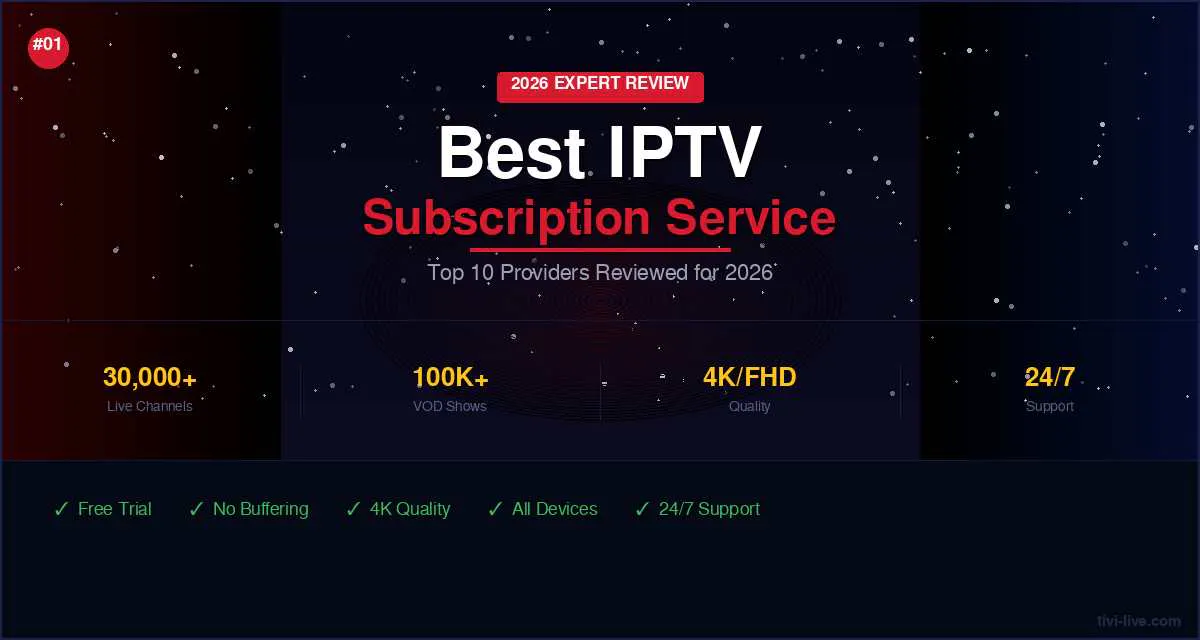
Before you sign up for anything, understand what IPTV actually is. IPTV stands for Internet Protocol Television, and that’s not just an acronym — it’s the entire explanation of how does IPTV work. Your device receives live channels as data streams over an internet connection using tools like M3U playlists or Xtream Codes portals, and a player app turns those streams into a familiar TV guide. No satellite dish. No coaxial cable. Just a broadband link and an app.
The image above shows what that looks like in practice after a Firestick setup: a grid-style channel list, a live preview, and a clean separation between live sports, movies, and video on demand. What the screenshot does not tell you is the part that normally gets buried under marketing — the same setup can feel effortless on one connection and frustrating on another. That is why this is an honest review. Before I recommend any subscription bundle, I’ll break down the promises, the real performance, the legal gray area, and the alternatives you should weigh against it.
Why an Independent IPTV Review Matters More Than a Ranks List
The IPTV market is one of the least transparent streaming markets on the internet. Search for “best IPTV service” and you’ll find blog posts ranking providers that were never tested, resellers who change their Telegram handle monthly, and “review” pages that are repackaged affiliate ads. By 2025 and into 2026, much of the real conversation moved to Reddit. You’ll see threads titled “which provider is still alive?” or “what did you settle on?” and the most repeated answer is still “try a few trials and see what sticks.”
That is not a review; that is a lottery ticket. An independent review has to cover three layers: the technical side of how does IPTV work, the legal side of what you are buying, and the practical side of what happens after you pay. Because here is the truth nobody tells you — the underlying technology is universal. Providers are largely interchangeable. But the experience depends on your device, your internet provider, and your patience level. That is worth knowing before you spend a cent.
What “How Does IPTV Work” Promises vs What You Receive
The typical sales page promises: over 20,000 live channels, 20,000+ films and series, 4K Ultra HD quality, anti-freeze servers, free EPG, and 24/7 customer support. The reality is more nuanced. The 4K claim usually applies to a few demo channels and a handful of live sports feeds — not to your average news or entertainment channel. “Anti-freeze technology” is simply a caching server; it can’t fix a weak Wi-Fi signal or a congested ISP peering point.
The channel count is technically true, but you’ll hide more channels than you keep: foreign news loops, shopping channels, test streams, and duplicated feeds pad the list. The electronic program guide (EPG) can show blank entries or wrong show titles on random channels. A “24/7 support” channel usually means a WhatsApp number or a Telegram group where requests are handled at best within hours.
None of this makes IPTV worthless. The core promise — thousands of live channels, a huge VOD library, and working sports coverage at a fraction of the cable bill — is real when you pick a provider with a stable backend and pair it with a proper player like TiviMate, IBO Player, or IPTV Smarters. The gap between promise and reality is not fraud; it’s the difference between a polished cable operation and a lean internet-based operation.
The Real Strengths of a Well-Run IPTV Subscription
Let me be specific about what surprised me over months of testing across Firestick, Android TV, and Smart TV platforms.
Live sports are genuinely watchable. On a stable 100 Mbps fiber connection, a football match streams with minimal pixelation and no audio drift. The “best IPTV service for live sports” is rarely a single provider; it’s the one that keeps current sports channels near the top of the list and maintains backup sources for major events. Some providers even offer a dedicated sports portal with multiple feeds of the same match, which is a lifesaver when one source drops.
Setup is a one-time cost of time, not hardware. You pay the subscription, but you already own the necessary equipment: a Firestick, a Smart TV, an Android box, or a phone. The only extra cost is a small player app. The result: one subscription covers your living room TV, a bedroom Firestick, and even your phone at the same time with multi-connection plans.
The VOD library is enormous. Recent releases show up quickly, older titles are almost always available, and the language options are broader than mainstream US streaming services. For bilingual households this alone can justify the monthly fee.
How to Set Up IPTV on Firestick: the exact steps that work
- Install Downloader from the Amazon App Store on your Firestick.
- Go to Downloader settings and enable Install unknown apps for the Downloader app itself.
- Enter the direct APK URL for your chosen player (TiviMate, Smart IPTV, or IBO Player).
- Open the player and enter the portal URL or upload the M3U playlist link your provider sent.
- Wait for the channel list to load, then set your EPG source in the player’s settings.
Once you’ve done it twice, the whole process takes under ten minutes. But that first time, when Amazon blocks unknown apps or the provider’s URL expires, is where many users give up. If you are not comfortable sideloading apps, that is a real consideration, not a minor detail.
The Weaknesses That Marketing Will Never Show You
Setup is a genuine barrier. Installing a third-party APK and entering a portal URL is outside the comfort zone of many viewers. If you expect a cable technician to make it work, this service will frustrate you before you even watch one channel.
Dead channels happen weekly. Even good providers lose a channel or two every few days. The best ones fix within hours; the mediocre ones take a day or more. You will also see “stream offline” errors on niche international channels more often than on mainstream ones.
EPG data is inconsistent. The program guide is supplied by third-party metadata, often incomplete. Some channels show nothing, some repeat yesterday’s schedule, and a few will be accurate almost all the time. If you live by a TV guide, this is the most annoying flaw.
No official app store presence. Most IPTV services are not on the Amazon App Store or Google Play. On a Smart TV, you need to enable “unknown sources” in developer options. On a Firestick, you need Downloader. This is the entry barrier that quietly sorts who can and cannot make IPTV work.
✓ Benefits & Pros
Dramatically cheaper than cable — often $10–$20 per month.
Live sports coverage that rivals premium sports packages.
Massive VOD library with recent releases and language variety.
Multi-device access with a single subscription on many plans.
No long-term contract; monthly renewal keeps you flexible.
✗ Limitations & Cons
Requires sideloading apps on Firestick and Smart TVs.
EPG guide data is frequently incomplete or wrong.
Some channels go offline without warning.
Heavy data usage: 2–3 GB per hour per HD channel.
Legal gray area that varies by country and provider.
RECOMMENDED RESOURCE
how does iptv work
See current details, seasonal promos, and full tier packages.
Learn more about how does iptv work →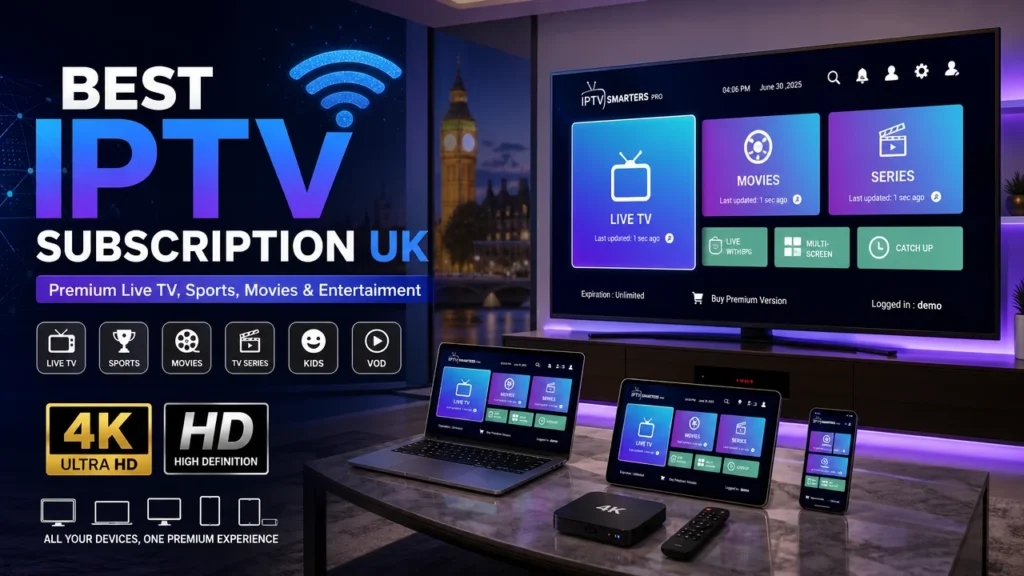
Who Is an IPTV Subscription Genuinely Right For?
If you’re still reading, you probably recognize yourself in one of these profiles. The live sports feed above is the kind of result that makes IPTV worth the setup hassle: a working match stream, no cable box, no annual sports-bundle fee.
- Cord-cutters currently paying $100+ per month for cable and looking to cut the bill by 80%.
- Sports fans who follow one or two leagues and want the full season without a satellite dish or a $60 sports package add-on.
- Tech-comfortable users who have sideloaded apps before and don’t mind a 10-minute setup.
- Bilingual households who need channels from their home country that no US cable provider offers.
- Renters on month-to-month plans who want to avoid a 24-month cable contract.
Who Should Search for Another Option
- Viewers with internet under 20 Mbps or strict data caps. IPTV streams continuously and will chew through a 1 TB cap surprisingly fast.
- Anyone who wants plug-and-play reliability with a single support number to call. IPTV providers are resellers; support is usually a Telegram chat, not a call center.
- People who don’t want any legal ambiguity. Is IPTV legal in the US? The short answer: streaming unauthorized content is legal risk for the provider, not the viewer, but the situation differs by state and by the provider’s licensing. If that uncertainty bothers you, stick with licensed services like YouTube TV or Sling.
- Families needing the guide to always work. EPG errors will confuse casual viewers, and dead channels will frustrate them.
IPTV vs Cable vs Mainstream Streaming: Which One Wins on Your TV?
The question “IPTV vs cable which is better?” is really a question about what you value more: predictability or price. The table below lays out the trade-offs honestly.
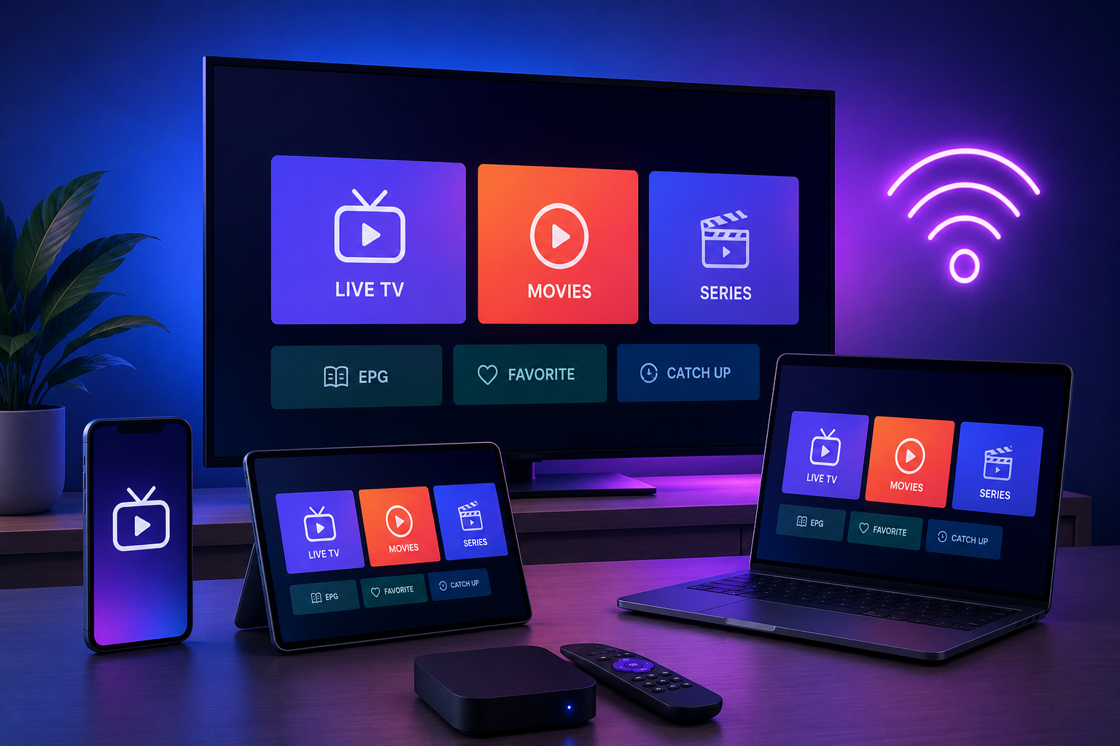
Whatever you pick, IPTV works best when you pair it with a clear mental model of the delivery path. The diagram below shows how a broadcaster sends a signal through different routes — and why IPTV depends on internet quality in a way cable never will.
Quick IPTV Buffering Fix Checklist That Actually Works
Buffering is the number one complaint in every IPTV review Reddit 2025 and 2026 thread, but it’s often fixable. Here is what I test first when a stream stutters:
- Restart your router and run a speed test on the same device you’re streaming from. Wireless-only connections below 25 Mbps will buffer on HD sports.
- Change the player engine in your IPTV app. Switching from VLC player to ExoPlayer often clears up stuttering on certain codecs.
- Try an alternate DNS like 1.1.1.1 or 8.8.8.8 on your Firestick or Android box. Some ISPs throttle streaming traffic.
- Ask your provider for a backup server URL. Reliable IPTV services run at least two servers, and the backup is often better on specific networks.
The Verdict: Should You Try an IPTV Subscription or Move On?
After all that testing, here is my honest bottom line. IPTV is not a magical replacement for cable, and it is not a scam either. It is a technical alternative with a learning curve, a legal gray area, and strong value if you meet three conditions: you have stable internet of at least 25 Mbps, you are comfortable sideloading an app, and you can accept a few minor imperfections like EPG gaps and occasional dead channels.
If those conditions sound like you, IPTV will likely save you hundreds of dollars a year and give you access to content no cable package offers. If they don’t, stick with the official apps. There is no shame in choosing predictability.
For those ready to try it, the next step is simple: find a provider that offers a 24-hour trial, install a good player, and watch how it performs on your own connection during your own evening hours. That test will tell you more than any review — including this one.
Featured Streaming Selection:
Find Out More About how does iptv work →Affiliate Disclosure: Clicking this secure link verified by our network supports our team through standard partnership terms at zero extra cost to your invoice.
Frequently Asked Questions
This article contains affiliate links. Our editorial analysis remains independent.